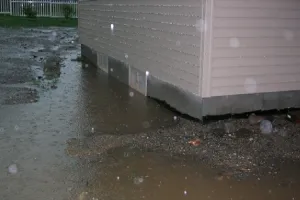


Rain is a normal part of life in Seattle, but water that repeatedly collects in the wrong place can create serious problems for a property. Saturated soil, standing water, erosion, and moisture around a foundation can all develop when runoff does not have an effective path away from the structure.
For homeowners dealing with these conditions, French drain installation Seattle services can provide a practical way to collect and redirect excess water. Robbins Foundation Systems offers drainage and foundation-related solutions designed around the individual characteristics of each property.
What Is a French Drain Used For?
A French drain provides an underground route for collecting and moving excess water. Instead of allowing water to remain on the surface or accumulate around a foundation, the system directs it toward a suitable discharge location.
French drains can be useful for situations such as:
- Persistent wet areas in a yard
- Water collecting near a foundation
- Poorly draining sections of a property
- Runoff traveling toward a building
- Saturated soil following periods of rain
The system is particularly useful when water needs to be managed below the surface rather than simply redirected across the top of the ground.
Why Are French Drains Useful in Seattle?
Seattle’s wet climate means that properties can receive substantial amounts of rain over the course of the year. If the surrounding soil cannot absorb or move water efficiently, drainage problems may become recurring rather than occasional.
A French drain can help manage this by creating a controlled route for excess water.
Effective drainage can help reduce:
- Persistent soil saturation
- Surface water accumulation
- Erosion
- Moisture near foundation walls
- Damage to certain landscaped areas
However, the effectiveness of any drainage system depends heavily on proper design and installation.
How Does a French Drain Work?
A French drain uses a gravel-filled trench and perforated drainage pipe to collect water and move it toward an appropriate outlet.
The basic concept is straightforward, but the installation needs to account for the property’s natural water flow.
- Site Evaluation – The first step is identifying where water comes from, where it collects, and how it currently travels across the property.
- Trench Planning – The drainage route is selected according to site conditions, elevation, soil characteristics, and the intended discharge point.
- Pipe and Aggregate Installation – A perforated pipe is installed within a suitable drainage medium to allow water to enter the system.
- Water Redirection – The collected water is transported toward a location where it can be discharged safely and effectively.
What Happens If Drainage Is Ignored?
Recurring water problems rarely disappear simply because the ground dries between storms. If the source of the problem remains unchanged, the same conditions can return with the next period of heavy rainfall.
Long-term drainage problems can contribute to:
- Erosion around landscaping
- Persistent muddy areas
- Soil instability
- Basement or crawl space moisture
- Increased water exposure around foundations
This is why drainage should be considered as part of the property’s overall maintenance and foundation protection strategy.
How Do You Know If You Need a French Drain?
A professional assessment can help determine whether a French drain is appropriate. Some drainage problems may be resolved through grading or surface water management, while others require an underground collection system.
A French drain may be worth considering when:
- Water repeatedly pools in the same location
- A yard remains saturated after rain
- Surface drainage cannot adequately redirect water
- Water naturally flows toward the property
- Foundation-adjacent areas remain consistently wet
The key is understanding the source and movement of the water before selecting a solution.
French Drain Installation by Robbins Foundation Systems
Robbins Foundation Systems approaches drainage projects by considering the relationship between water, soil, and the structure. Rather than treating a French drain as an isolated installation, the surrounding property conditions should be evaluated to determine the most appropriate drainage strategy.
Depending on the site, the overall solution may involve:
- French drain installation
- Drainage improvements
- Water redirection
- Foundation moisture management
- Other site-specific drainage measures
This approach helps ensure the system is designed around the property’s actual needs.
What Are the Benefits of Professional Installation?
A professionally designed French drain can provide several advantages compared with attempting to redirect water without understanding the site’s drainage patterns.
Potential benefits include:
- Better control of groundwater
- Reduced surface water accumulation
- Improved soil conditions around affected areas
- Less recurring erosion
- Reduced moisture exposure near foundations
- A more predictable drainage path
Proper installation also helps reduce the risk of simply moving the water problem from one part of the property to another.
Frequently Asked Questions
Q. How much does French drain installation in Seattle cost?
Pricing depends on the length and location of the drain, soil conditions, accessibility, excavation requirements, and where the collected water will be discharged.
Q. How long can a French drain last?
A properly designed and installed French drain can provide long-term drainage service, although maintenance may be needed over time.
!. Can a French drain stop basement leaks?
A French drain can help manage water around a property, but it is not automatically a solution for every basement leak. The source of the water should be identified first.
Q. Does every wet yard need a French drain?
No. The appropriate drainage solution depends on the cause of the water problem. Grading, surface drainage, downspout management, or another approach may be more suitable in some situations.
A Better Way to Think About Property Drainage
The purpose of French drain installation Seattle services is not simply to put a drainage pipe in the ground. The real objective is to give unwanted water a controlled path away from areas where it can cause problems.
For homeowners dealing with recurring water accumulation, saturated soil, or drainage concerns near their foundation, Robbins Foundation Systems can evaluate the property’s conditions and help determine an appropriate approach.
When drainage is designed around the way water actually moves across a property, it becomes a proactive part of protecting the home rather than a reaction to repeated water damage.